Mistake 1: Skipping Property Surveys and Boundary Verification
Starting a land clearing project without confirmed property boundaries creates financial and legal nightmares that can halt work for months. In San Angelo and throughout Tom Green County, property disputes over fence lines and easements are surprisingly common, particularly on older ranch properties where original surveys date back decades. Clearing vegetation or grading soil on a neighbor’s land exposes you to immediate liability, restoration costs, and potential lawsuits that easily exceed the original project budget.
The Concho Valley’s history of subdivided ranch land means many properties have complex boundary situations. Properties near Christoval and Eldorado often feature creek beds, roads, or fence lines that don’t align with actual legal boundaries. Summer heat can make old fence posts and property markers difficult to locate under thick brush, but assuming visible boundaries are accurate leads to expensive corrections.
Beyond neighbor disputes, failing to identify utility easements causes even costlier problems. Damaging buried power lines, water mains, or telecommunications infrastructure during clearing operations can result in repair bills exceeding $50,000, plus project delays of several weeks. Texas law requires property owners to verify utilities before excavation, and insurance rarely covers damage from unauthorized clearing.
Professional survey verification before starting work protects your investment. Licensed surveyors use county records and GPS technology to establish precise boundaries, identify easements, and mark restricted areas. This upfront cost of $1,500 to $3,000 prevents the much larger expense of restoring improperly cleared land or defending against property disputes. Schedule a consultation to discuss proper survey requirements for your specific property.
Mistake 2: Ignoring Soil Composition and Drainage Patterns
San Angelo’s caliche-heavy soil and unpredictable drainage patterns demand careful planning before any clearing begins. Removing vegetation without understanding how water naturally moves across your property creates erosion problems that worsen with every rain event. The region’s clay and caliche layers sit close to the surface across much of Tom Green, Schleicher, and Irion Counties, making improper grading decisions permanent and expensive to correct.
Flash flooding during spring and fall storms hits the Concho Valley hard, and cleared land without proper drainage channels can transform into gullied wastelands within a single season. Properties near Sterling City and Big Lake face particularly challenging soil conditions, where expansive clays shift dramatically between wet and dry periods. Clearing without accounting for these soil characteristics leads to foundation problems, impassable access roads, and standing water that attracts mosquitoes and damages future construction.
The financial impact compounds quickly. Correcting drainage failures after clearing requires heavy equipment to regrade entire sections, install culverts or French drains, and potentially import engineered fill material. These repairs typically cost three to five times more than initial proper planning would have required, often running $15,000 to $40,000 for residential properties.
Soil testing and drainage analysis before clearing provide critical data for equipment selection, grading plans, and erosion control measures. Professional operators assess soil composition, identify natural water flow patterns, and design clearing approaches that preserve beneficial drainage while preventing erosion. Understanding whether your property contains unstable clays, porous caliche, or rocky substrate determines the right equipment and techniques. Proper site preparation services include these essential evaluations to protect your long-term investment.
Mistake 3: Using Inappropriate Equipment for the Job
Equipment mismatches cause project delays, budget overruns, and property damage that ripple through every phase of development. Many property owners assume any bulldozer or excavator can handle land clearing, but West Texas vegetation and terrain require specific equipment capabilities. Mesquite trees with root systems extending 40 feet deep demand different machinery than shallow-rooted brush. Rocky caliche layers near Ozona and Menard require reinforced cutting edges and higher horsepower than equipment suited for softer soils.
Renting undersized equipment creates false economy. A small skid steer might cost less per day, but struggling through dense cedar brakes or mature mesquite groves extends the rental period dramatically. What should take three days with proper equipment stretches to two weeks with inadequate machinery, multiplying rental costs and delaying subsequent construction phases. Operators pushing equipment beyond its designed capacity also risk mechanical failures that add repair charges to your bill.
Conversely, oversized equipment damages soil structure and creates compaction problems that affect future landscaping, septic systems, and foundation stability. Heavy dozers compact caliche and clay soils so severely that water infiltration becomes nearly impossible, requiring expensive remediation. Track marks from inappropriate equipment create ruts that persist for years, collecting water and accelerating erosion.
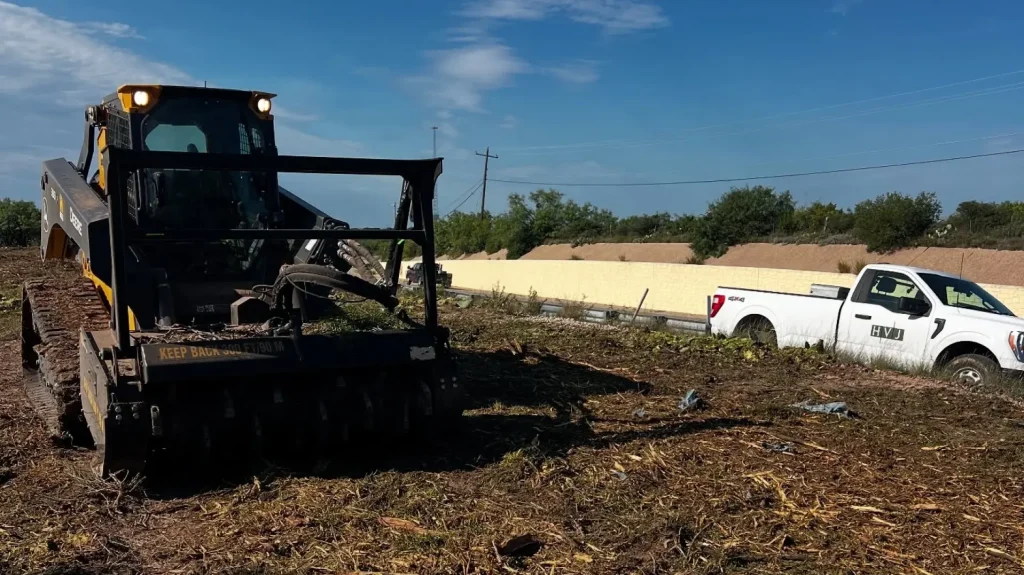
Selecting proper equipment requires evaluating vegetation density, root systems, soil conditions, property access, and final site requirements. Professional operators maintain specialized attachments for different clearing scenarios: forestry mulchers for brush, root rakes for mesquite removal, rock saws for caliche layers, and precision grading equipment for final site preparation. The right tools complete work faster, preserve soil quality, and deliver results that support your development plans. Quality land clearing professionals match equipment to site-specific conditions for optimal outcomes.
Mistake 4: Neglecting Permits and Environmental Compliance
Regulatory compliance failures stop projects cold and create penalties that dwarf the cost of proper permitting. While rural properties in Tom Green County and surrounding areas face fewer restrictions than urban developments, assuming no regulations apply leads to costly surprises. Environmental protection rules, county ordinances, and federal wetland regulations affect many properties throughout the San Angelo region, and violations carry serious financial consequences.
The Texas Commission on Environmental Quality monitors clearing activities that might affect water quality, particularly near creeks, draws, and flood plains common throughout the Concho Valley. Properties containing seasonal waterways or areas that hold water after rain may trigger wetland determinations requiring federal permits. Clearing these areas without authorization results in stop-work orders, restoration requirements, and fines starting at $25,000 per violation. The Concho River watershed includes numerous tributaries flowing through properties in Eden, Miles, and Ballinger, making environmental review essential.
County and municipal burning restrictions also affect debris disposal options. San Angelo’s burn bans during dry periods prohibit the most cost-effective method of clearing brush piles, forcing alternative disposal that increases project costs. Tom Green County requires permits for large burns even when general bans aren’t active, and unauthorized burning can result in fire department response charges exceeding $10,000 plus potential criminal charges.
Endangered species considerations affect properties throughout West Texas. The Concho water snake and several native fish species trigger federal protection in specific areas, while migratory bird nesting seasons restrict clearing timing. Professional operators understand these requirements and schedule work to avoid compliance problems. Proper permitting typically adds $500 to $2,000 to project costs, a small investment compared to violation penalties and project shutdowns.
Mistake 5: Inadequate Planning for Debris and Material Removal
Debris disposal represents one of the largest hidden costs in land clearing projects, yet many property owners fail to budget adequately for material removal. A single acre of mature mesquite and cedar produces 40 to 60 tons of woody debris, creating massive piles that become expensive problems without proper planning. Leaving brush piles on-site invites fire hazards, harbors rattlesnakes and feral hogs, and prevents final grading and construction activities.
San Angelo’s limited commercial disposal options mean most debris requires on-site management. The city landfill accepts brush at approximately $65 per ton with quantity restrictions, making hauling costs for a typical five-acre clearing project reach $15,000 to $25,000 in disposal fees alone. Properties in more remote areas like Sterling City or Eldorado face even higher transport costs due to distance from disposal facilities.
Alternative disposal methods each carry distinct advantages and limitations. Controlled burning offers the most economical solution but requires permits, appropriate weather conditions, and compliance with air quality regulations. West Texas wind patterns make safe burning possible only during specific seasonal windows, potentially delaying projects for months. Forestry mulching processes debris into soil-enriching mulch but requires specialized equipment and works best with smaller-diameter materials. Chipping produces usable landscape material but demands additional equipment rental and creates storage challenges if buyers aren’t pre-arranged.
Rock and caliche removal creates separate disposal challenges, as this material can’t be burned and weighs significantly more than wood. However, clean caliche often has resale value for road base or fill material, potentially offsetting removal costs. Strategic planning identifies debris disposition methods during project design, scheduling work around weather windows for burning or arranging mulch and rock buyers before clearing begins. Professional operators integrate debris management into project timelines and budgets, preventing the common scenario of completed clearing followed by months of unsightly brush piles.