Evaluating Property Conditions Before You Begin
Before any equipment touches your property, a thorough site assessment sets the foundation for successful outcomes. In San Angelo, where mesquite, juniper, and native grasses dominate the landscape, understanding what you’re working with prevents costly mistakes and ensures efficient operations.
Start by walking the entire property to identify vegetation types, terrain changes, and potential obstacles. Document areas with dense brush, large trees requiring specialized removal, and any rocky outcroppings common to our region. This initial survey reveals drainage patterns that become critical during heavy spring rains when runoff can reshape unprotected soil.
Check for utility lines, both above and below ground. Contact Texas 811 at least two business days before beginning work to mark gas, electric, water, and communication lines. Property boundaries should be clearly identified through a recent survey to avoid encroachment issues with neighbors.
Soil composition varies significantly across the area. Clay-heavy soils near creeks require different approaches than the rockier terrain found in upland areas. Test soil samples to determine load-bearing capacity if you plan to build structures, as this affects pad construction requirements and foundation planning.
Matching Tools to Your Specific Project Needs
Equipment selection directly impacts project efficiency, cost, and final results. Small residential projects may only need a skid steer with brush cutter attachment, while larger tracts benefit from bulldozers, excavators, and forestry mulchers. The vegetation density and intended land use determine which approach works best.
Skid steers offer versatility for properties under five acres. These machines handle brush removal, light grading, and can switch between attachments for different tasks throughout the project. Their compact size minimizes soil compaction and allows access to tighter spaces between existing structures or trees you want to preserve.
For heavier vegetation including mature mesquite and cedar, forestry mulchers process material in place, turning trees and brush into nutrient-rich ground cover that reduces erosion. This method works particularly well when soil preservation matters, as it avoids the disturbance caused by complete root removal.
Grubbing removes vegetation along with root systems, creating a clean slate for construction or agricultural use. This thorough approach prevents regrowth but requires additional steps to stabilize exposed soil. In our climate, summer heat can quickly dry out disturbed earth, while occasional heavy rains create erosion channels if proper measures aren’t implemented immediately.
Executing Your Project with Precision and Care
Systematic execution prevents rework and maintains control throughout the process. Begin at the property’s highest point and work downward, following natural drainage patterns. This approach keeps debris from repeatedly crossing already-cleared sections and helps identify water flow issues before they become problems.
Create designated areas for different material types. Separate burnable brush from sellable timber and recyclable material. Large mesquite logs often have value for smoking wood, while cedar can be processed for fence posts or landscape mulch. Sorting during removal saves time and potentially offsets project costs.
Maintain access routes as you progress. Equipment needs consistent pathways for material removal and to avoid creating ruts that channel water incorrectly. In areas where ranch roads or fire guards will eventually run, rough-grade these paths first to establish your working infrastructure.
Consider seasonal timing for optimal results. Late fall through early spring offers cooler temperatures that are easier on equipment and operators. However, winter rains can make soil too soft for heavy machinery. Summer provides firm ground conditions but requires starting early in the day before afternoon heat becomes dangerous for workers and stresses hydraulic systems.
Protection of features you want to keep requires active planning. Flag trees, rock formations, or other elements worth preserving. Establish buffer zones around these features, and brief all operators on their locations before work begins each day.
Disposing of Materials Responsibly and Efficiently
Proper debris management separates amateur attempts from professional results. Three primary disposal methods serve different project types and budgets: on-site burning, hauling to approved facilities, or grinding for mulch and soil amendment.
Burning requires permits from local authorities and strict adherence to fire safety regulations. Wind speed, humidity levels, and proximity to structures all factor into whether burning is appropriate on any given day. Create firebreaks around burn piles and have water sources readily available. Never leave active burns unattended, and fully extinguish all material before leaving the site.
Hauling removed vegetation to licensed disposal facilities ensures clean results but adds transportation costs. This method works well for projects near urban areas or when fire restrictions prevent burning. Some facilities accept green waste for composting programs, potentially reducing disposal fees.
Grinding debris into mulch provides immediate erosion control while adding organic material back to the soil. Spread this processed material across cleared areas to retain moisture, suppress weed growth, and moderate soil temperature. As it decomposes, the mulch improves soil structure and fertility for future vegetation or landscaping.
Final cleanup includes removing all non-organic debris like fencing wire, old metal posts, and any trash discovered during clearing. Rake or blade the surface to create smooth, even grades that direct water appropriately and provide clean working surfaces for subsequent construction phases.
Protecting Your Investment Through Proper Finishing
Finishing work determines how well your property performs for years to come. Exposed soil remains vulnerable until protective measures take hold. Address erosion control immediately after clearing, particularly on slopes where rain can quickly wash away topsoil and create gullies.
Grading establishes proper drainage that prevents standing water and directs runoff away from buildings and roads. In our region, where rainfall often arrives in intense bursts rather than gentle showers, these drainage pathways handle significant water volumes. Create positive drainage that moves water toward appropriate collection areas or natural drainage courses.
Soil stabilization methods depend on your timeline and intended use. Quick-growing native grasses establish ground cover within weeks during favorable conditions, holding soil in place while you proceed with construction or further development. For areas requiring immediate traffic, aggregate base or caliche provides a stable working surface that resists rutting and erosion.
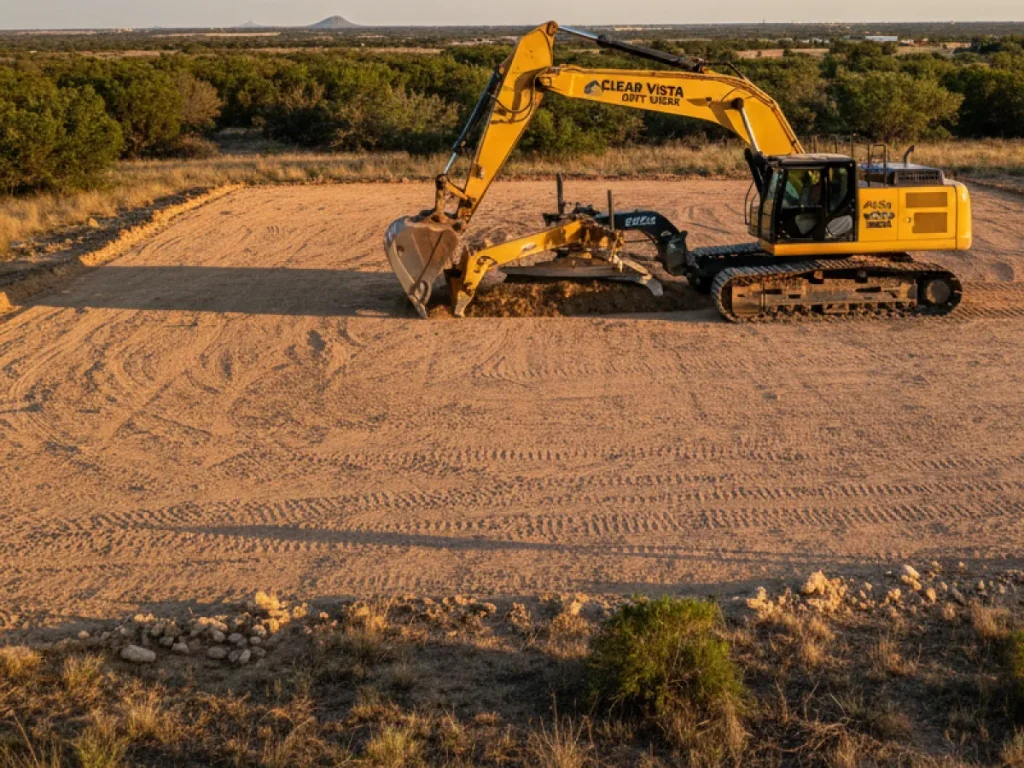
Building pads demand precise elevation work and proper compaction. Multi-lift construction with compaction testing between layers ensures stable foundations that won’t settle unevenly. Soil types across the region respond differently to compaction efforts, making experience with local conditions valuable for achieving specified densities.
Long-term maintenance planning prevents cleared areas from returning to their previous overgrown state. Regular mowing, selective herbicide application, or periodic brush removal keeps unwanted vegetation controlled. Strategic placement of gravel roads or cleared fire guards creates maintained zones that segment larger properties and provide ongoing access for management activities.
When professional results matter, Clear Vista Dirt Work & Land Services, LLC brings the specialized equipment, local knowledge, and proven techniques that transform raw land into functional spaces. From initial site assessment through final grading, experienced operators understand how soil types, vegetation patterns, and seasonal conditions interact to affect project outcomes. This expertise ensures your property receives the careful attention required for lasting results that meet both immediate needs and long-term goals.